Denver and Boulder Colorado Real Estate 

April 23, 2022

Pros and Cons of Moving to Denver

Pros & Cons of Moving to Denver


Denver is a great city with plenty to offer, but it's crucial to weigh the pros and cons before committing to moving there. Here are some of the things you need to consider before packing your bags and heading for the Rockies.


Pros of Moving to Denver


1. It's Near the Mountains


Denver is close to almost 60 mountains, commonly known as fourteeners—mountains higher than 14,000 feet with at least 300 feet of prominence. In Denver, you'll be just moments away from the Rocky Mountains. You'll also be close to Mount Elbert, Mount Evans, and Long Peak housing the Rocky Mountain National Park.


If you're moving to Denver, you may want to consider cheap car shipping, especially if you are not confident your vehicle can navigate the steep elevations. This can keep your engine from sustaining tremendous stress that can take its toll on your car's overall health.


2. It's Downright Gorgeous


Living in Denver means being close to many incredible natural landscapes, no matter the time of year. With over 300 days of sunshine every year, Denver is an excellent place for those who want to be active and enjoy outdoor activities all year long. Not only will you enjoy spectacular sights and sounds of nature, but you'll also benefit from the typical perks that come with living in a modern, urban city. This includes shopping centers, public parks, art museums, and many more. But Denver's beauty is what attracts a lot of people. With stunning peaks and mountain vistas, you're sure to enjoy the spectacular sub-alpine environment.


3. A Thriving Economy


Denver is home to five major industries that play a significant role in the city's economy, including mining, aerospace, manufacturing, food processing, and oil and gas. Denver's economy is growing with world-class companies like Lockheed, Google, and IBM. Due to its strategic location, Denver also serves as the distribution hub of the Front Range and Rocky Mountain regions. If you want to find a job in Denver, chances are there will be plenty of options available. You can expect higher-than-average rates for employment at over 60 percent. However, housing prices tend to go up with employment rates.


4. It's a Great Place to Raise Kids


Denver is one of the top places where many families relocate due to its safe environment, good schools, and robust support system. Most private schools are known for their commitment to providing excellent education and encouraging academic excellence among their students.


5. A Well-rounded Population


Denver is home to diverse people and cultures that appeal to many people. The city has maintained its cultural diversity, ensuring that new residents feel at home and mingle with those who came before them. The people who live in Denver are also very active. Most residents walk to work, take public transportation, or use their bicycles to navigate the city. Additionally, over 100 recreational centers can be found throughout Denver.


Cons of Moving to Denver


1. It's Not Cheap


The cost of living in the Mile High City is pretty high. The cost of living in Denver is 12% higher than the national average. Still, housing expenses account for most of this difference, coming in at 34 percent above average. The typical home costs $450,000, while monthly rent varies from around $1,400 for a one-bedroom apartment to as much as $2,500 in up-and-coming areas of Denver. These rates don't leave much room for splurging on luxuries. At the same time, the average cost of groceries and utilities in Denver is also higher than the national average.


2. It Can Get Cold Very Quickly


Denver experiences four distinct seasons every year. However, the city's location also makes it vulnerable to sudden temperature drops during the winter months. In fact, daily highs can reach 70 degrees Fahrenheit in August, but winter lows can plunge to as much as 15 degrees below zero. You will need a car capable of handling adverse weather conditions, especially if you plan to commute daily even during the harsh Denver winters.


3. Beware of Snow and Sleet


If you have never experienced snowfall before, some things about it might surprise you. During winter storms, the city will be shut down and several residents will stay indoors until the roads are cleared enough for travel. You'll need to keep all necessary supplies in your home whenever snow hits Denver, as chances are you'll get stranded if you don't. This includes food items that can last long without refrigeration—canned goods and energy bars among them.


4. Traffic Is a Nightmare


If you value your time, avoid driving to work during the early morning hours or at night. Otherwise, you may get stuck in traffic for more than 45 minutes—which is an average travel time from the northernmost areas of Denver County to the southernmost ones. Denver hosts at least a couple of events at its stadiums every night of the week, so opt for public transport if you want to avoid road congestion.


5. Infrastructure Issues


Denver is working hard to maintain its infrastructure, but it's been a struggle for the city so far. There have been complaints about inefficient traffic management, making several commuters lose faith in their city government. While not entirely compromised, the water supply may fail to meet demand. For example, the pressure in your neighborhood may go down during the summer months as more water is used for irrigation.


The Bottomline: See If Denver Is for You


Denver is one of the best places to live and work in Colorado, making it one of the most popular cities. Unfortunately, its popularity has also made it overcrowded at times. It's essential to know all the pros and cons of moving to Denver before making a final decision.

Posted in Blog Links
Jan. 28, 2022

3 Questions to Ask Yourself Before Getting a Home Warranty

Home WarrantyYour house is your most valuable asset, and you want to protect that investment. Part of doing that is ensuring that your home’s systems and appliances are in good working order at all times. Unfortunately, repairs and replacements can be prohibitively expensive, but you can protect your finances with a Colorado home warranty. Then, the warranty will keep your systems and appliances in tip-top condition without you having to pay for the repairs or replacements.

First, ask yourself some questions before making a purchase. Then, you will be ready to buy a warranty.

1. Do Your Appliances or Systems Have Known Pre-existing Conditions?

Home warranties are designed to fix and repair systems and appliances that have broken down due to normal wear and tear. However, most warranties don’t repair or replace items that have pre-existing conditions at the time you purchase the warranty.

For example, if your refrigerator stops working before you apply for the warranty, it won’t be covered. You’ll have to handle the replacement or repair yourself.

Keep in mind that some companies cover unknown pre-existing conditions. This means you can get a repair or replacement if you don’t know about the condition ahead of time as long as you weren’t aware of the problem before getting the warranty.

Companies have various sets of requirements when covering items with pre-existing conditions. Generally, companies only pay for items when the problem couldn’t reasonably be discovered with a visual inspection or mechanical test. While a mechanical test sounds complicated, it’s usually just a matter of being able to turn the appliance or system on and off without any issues.

If your appliances are working great now, they could still have pre-existing conditions. Thus, ask the home warranty company how it handles these issues before purchasing coverage. Also, assume that the company won’t pay for coverage for appliances and systems that you know are damaged. Even so, a home warranty can be a good purchase since it will cover appliances and systems that are working now but could break at a later date.

2. Do You Stay on Top of Routine Maintenance?

Before purchasing a home warranty, it’s important to look at your track record regarding maintenance. If you don’t regularly change your air filters, clean the coils in your refrigerator, and complete other regular maintenance tasks, you might have trouble making a successful warranty claim. In fact, some companies require that customers submit proof of maintenance before handling repairs or replacing items.

You can check the status of your appliances by hiring a professional to evaluate them. If your systems and appliances are in good shape, you’ll be ready to speak to a home warranty company. Ask if the maintenance records you have will provide enough evidence for your claims.

On the other hand, if you’ve been diligent about your maintenance, you’re ready to buy a warranty now.

3. What Coverage Do You Need?

Home warranty companies generally offer coverage tiers and add-on options. While this might seem overwhelming, it’s actually easy to find the right coverage after inventorying your home. Consider the age of your appliances and systems to see if they’re likely to break down in the near future. Then, think about the cost of replacing and repairing those items. For instance, replacing a hot water heater can cost $1,500 or more. In fact, you can expect to pay around $3,000 if it’s a tankless water heater. Thus, that’s an expensive item that would benefit from the warranty.

Once you know what you need to cover, look over various plans to see what’s included and excluded. Be especially mindful of possible exclusions, such as the ice maker on your refrigerator. Then, browse the add-ons to see if you need to add additional coverage for exempted or uncovered items.

By the time you finish, you should have a plan that meets your needs. You can use the warranty to repair or replace items instead of digging into your emergency fund or using credit cards.

Shop for a Home Warranty After Answering These Questions


Answering these questions will guide you toward the right home warranty. Spend some time answering the questions, and then pick out your warranty. After the waiting period passes, you can make claims if a covered system or appliance breaks down.


Posted in Home-tips
Feb. 10, 2020

How to tackle the biggest challenges buyers will face in 2020

The title may be a bit misleading, as this isn’t a doom and gloom blog about the sad state of real estate in the coming year. While there may be some challenges to selling your home in 2020, they’re not insurmountable. So, if this is the year you’ve decided the sell, read on to discover your best strategy.


What are the challenges?

We are defining seller challenges as those indicated by more than 500 top real estate agents across the country in a fourth-quarter survey conducted by HomeLight, a real estate referral company. Agents indicated that a shift from being a seller’s market may pose a challenge, in addition to inventory levels, and overpricing, so let’s take a look.


Market shift

43.5 percent of agents predict that the market will gradually shift to a more neutral position, away from being solely a seller’s market. However, another 41 percent of agents predict that 2020 will remain a seller’s market. These forecasts align similarly with how agents felt available inventory would change in their markets. 45 percent of agents predicted housing inventory levels would rise in their markets, while 44.4 percent believe that those levels will remain level. But, what does all of this mean for you? 


If you’re trying to decide between selling this year or in a couple of years’ time, 2020 may be your best choice. Most sellers, given the luxury of choice and time, would choose to sell when the market is predictable, rather than putting it off and into the unknown. With just under half of agents predicting a gradual shift in the market, it’s safe to say that 2020 is a great year to sell. 2021, however, is a different story.


When asked when they thought the United States would hit its next recession, only 12 percent of agents replied that they believed it would happen before the end of 2020. However, 36 percent of agents responded that they believe the U.S. will hit its next recession before the end of 2021. 


Pricing poses the greatest challenge

The biggest challenge, according to agents, in 2019 was the tendency for sellers to overprice their homes. Overpricing will again pose the greatest challenge this year, forcing sellers to take a more thoughtful approach to pricing their homes


With 54 percent of agents responding that they expect home prices to remain level, overpricing will likely stand out like a sore thumb and cause a house to sit on the market. Sellers should embrace the predictability of the market and let it guide their approach to pricing if they want to sell their properties quickly and smoothly.


The best way to tackle hurdles in the real estate market this year is to keep calm and play it safe. For the most part, it’s business as usual, and going along with what your local market is dictating will pave the way for a smooth home sale process.

Posted in Home Buying
Jan. 16, 2020

Why Didn't my home sell? 13 Reasons, and how we fix them!

Why didn’t my house sell?   The top 13 reasons explained and How we fix them!


#1: The photos were low quality or didn’t show the home at its full potential.                       

Photos are the #1 factor that the public utilizes when deciding which homes to see in person.  Top Real Estate agents understand the importance of utilizing extremely high-quality photography.  However, far too many inexperienced or “budget” agents still think that a few cellphone snapshots are an acceptable option.   While cellular phone cameras have greatly improved, even the best “phone pics” are still vastly inferior to the shots taken by a professional real estate photographer.   If your last agent used poor quality photos, then your listing traffic suffered tremendously.    With poor photos posted, most online shoppers didn’t ever bother to read the description, much less request a showing.

*We always utilize photos taken with latest “High Dynamic Range” technology that eliminates shadows, improves focus, enhances contrast, and heightens color saturation.  Additionally, our photos are always taken with a wide-angle lens to make your home appear more spacious.   We also include additional shots of desirable neighborhood amenities like pools, parks, and community centers, while making sure to exclude any photos of negative features that might discourage people from requesting the showing. We only work with the absolute best photographers, who understand how to properly stage the room and compose the shots. 


#2: The right buyers never saw the home, due to an improperly completed MLS listing         

We often get called to take over where an unsuccessful agent left-off.  One of the first things we analyze, is whether all the MLS fields were completely and properly filled out.   Quite often, they were not.   The Denver MLS is an extremely complex system, with literally several thousand searchable criteria fields.  Quite often many less experienced (or careless) agents fail to properly list all the unique features of a home, in the appropriate MLS fields.   Each omission like this could mean that a perfectly matched house-hunter failed to find your home online, in their online search.   To make matters worse, there are two competing MLS systems in the Denver Market (IRES and REColorado) that DO NOT share listings with one another.  Most agents can only afford to join one of the two… which means that their listings are completely missed by every agent who is using the other MLS system.  

*As a top producing Colorado Team, we subscribe to both MLS systems used in Denver & Boulder.  We make sure that every one of our listings is placed in both MLS Systems.  We also follow a very detailed protocol, to ensure that we don’t miss a single field when entering our listings into both systems.

#3: The home wasn’t featured prominently enough on Zillow and Trulia.                                         Whether or not you personally prefer Zillow’s search interface over its competitor’s, the fact remains most serious home shoppers are using it.   In fact, Zillow and Trulia (Trulia is owned by Zillow), have more traffic between them than the next 11 competing sites combined!   To put this in perspective, Redfin gets less than 1/10th the traffic that Zillow and Trulia receive.   Make no mistake about it, Zillow is a “For Profit” business, who earns its revenue by charging top-producing real estate agents to advertise there.   Therefore, the listings of the agents who spend the most money with Zillow and Trulia, enjoy much more prominent placement on their site.   Of course, there are other factors that Zillow considers, when determining which listings to rank higher, which only the agents well vested in the Zillow system are privy to.

*In addition to being one of Denver’s top advertisers with Zillow, we are well versed on all of the criteria Zillow requires to ensure that our listings are ranked at the top and remain there for the maximum period of time possible!  Give us a call, we’ll be glad to demonstrate for you how Zillow consistently places our listings on the top of its rankings!

A screenshot of a cell phone

Description automatically generated


#4: Cutting-edge Real Estate marketing techniques weren’t used.

Modern technologies to showcase homes online have been evolving at a blistering pace in the last few years, and the major real estate websites have adapted to favor the listings that feature those cutting- edge visuals.  Furthermore, Millennials (who are rapidly becoming the largest buying segment), expect them!    As you might suspect, far too many agents are either out of touch with the most relevant marketing techniques, or they’re simply don’t have the budget or knowledge to implement them.    As a top-producing team, we have a full-time team of marketing experts who ensure that our listings are presented with every cutting-edge technology available.  We utilize the latest techniques like:

·         Aerial Drone Videography

·         360 Virtual Walk-Through Tours

·         Matterport Cross Section Modeling of the Home

·         Floorplan Mapping

·         High Dynamic Range Photography

·         Reflective Yard Signs with solar-charged night lighting

·         Boosted Social Media posts targeted to active buyers

*We also offer multiple listing packages to fit every budget, and property type.   We’ll implement a customized marketing strategy to ensure that your home is seen by as many perspective buyers as possible, in every format available!   To see examples of just a few of our cutting-edge marketing techniques in action, go to…  http://prop.tours/davidhakimi

#5: The home description wasn’t well written or detailed enough.                                                     Effective home descriptions should paint a picture that allows potential buyers to see themselves in the home, while also providing important information about the home’s important features and desirable upgrades.  A well-written description also highlights things like desirable school districts, local amenities, distance to local restaurants and shops, and other sought-after features of the area.   If the description leaves out important details about the home, buyers aren't going to jump through hoops to find out what they want to know about it.

*We work together with each of our clients to craft a detailed home description that accurately portrays the best aspects of your home and gets every possible buyer into the home.


#6: The home was hard to show!  (Usually for one or more of these four reasons…)

a)      The Agent didn’t Use a Professional Showing Service, choosing instead to personally     schedule their own showings to save money.

Some listing agents (or brokerages) make homes considerably harder to show by refusing to utilize a professional, 3rd party showing service to facilitate the easy scheduling of showing requests.  

Professional showing services allow showings to be easily requested 24 hours a day, through their online scheduling systems.  Many buyer’s agents often find themselves scheduling and requesting showings late at night, or very early in the morning, during the busy season.  Nothing is more frustrating to a buyer’s agent, than requesting a showing from another agent who insists on scheduling their own showings (because Murphy’s Law says those are always the same agents who don’t answer their phone or quickly return calls).   Even some of the major brokerages (Re/Max and Sotheby’s) still insist on scheduling their own showings without using a 3rd party scheduling service, which massively complicates the process of routing the next day’s showings (if a buyer’s agent is attempting to schedule them before or after normal business hours.  This is the worst, when a buyer’s agent is scheduling showings for a relocation client.  Relocation clients are often only in town for a day or two, and unable to reschedule later.  If their agent can’t easily confirm a showing appointment, then they often just skip that house!   This is unfortunate, because most relocation buyers are very serious, and ready to write an offer on one of the homes they see during their brief house-hunting trip!

b)      The Seller required too much advanced notice or had too many restrictions on showings.

Making the home easily accessible for showings is crucial.   Families with pets, small children, and those who work at home are often the most challenged, and sometimes there isn’t much a family can do to avoid putting some restrictions on showings.   However, it can’t be stressed enough that sellers need to make their home as easy to access as possible, even if that is a little bit uncomfortable to accommodate.  No one ever said that selling a home is easy, and sometimes sellers simply need to push a bit harder to accommodate showings at the buyer’s requested time.   Refusing to accommodate buyers requested times, just makes it more likely that they will buy a competing home!

c)       The Seller insisted on personally attending the showings

Last, are sellers who insist on staying in the home for showings, or worse yet insist on giving every buyer a “guided tour” of the home.   This is an ABSOLUTE NO-NO!   This makes buyers EXTREMELY uncomfortable and renders them unable to comfortably experience the home.   Buyers like to explore and envision themselves living there, and comment freely about each home’s pros and cons.  When the seller is present, doing this becomes extremely awkward for buyers.  Furthermore, most buyers know within a minute or two of entering the home, if they like it or not.  When the seller is insisting on “giving a guided tour” some buyers will politely tour an entire home, that they otherwise would have left almost immediately after entering.   Attending the showings is a great way to turn-off a buyer, who otherwise might have actually considered the home.

    d) Renters Refused to leave or tidy-up for showings           

Rental properties are often very difficult to schedule, because the Tenants won’t cooperate (for fear of losing their rental).  Renters often employ stalling tactics like insisting on exercising their rights to a full 24 hours before each showing.  Then, they leave the house in a messy state and refuse to clean or prepare the home to be properly shown.   Its always best to list a home after the renter’s lease is up, when the unit can be shown vacant and properly staged.

#7: The home had too many “Rough-Edges” or didn’t show well.

When selling a home in a competitive market, first impressions are everything!   In fact, most buyers will “rule out” a home they don’t like within the first 2-3 minutes of entering it.   Often, the buyer can’t tell you exactly what it was they didn’t like, but they simply knew it.   Typically, the home didn’t have any major issues, but rather several minor issues that compounded to make the home feel run-down and neglected in general.   Being a “fixer-upper” is fine if the seller is willing to offer the home at a bargain price.  However, problems arise when the home is somewhat rough, but the seller still expects to sell it for top dollar.  Obviously, no buyer is going to pay top-money for a home that appears to need lots of small items addressed!   The following are all easily fixed items that an experienced listing agent will advise you to correct, prior to allowing potential buyers through the home: 

·         Cracks, holes or poorly textured repairs in drywall

·         Poorly chosen paint colors (too bright or polarizing, rather than neutral and generally appealing)

·         Dirty walls, doorjambs, or baseboards

·         Pet odors, pet damage, litter boxes either visible or smelly

·         Cracks in garage/basement floor, or settling on the Front Porch/Driveways/Sidewalks

·         Unfinished home-improvement projects, or half-completed basement finishing

·         Stained, worn, or damaged carpet

·         Hardwood floors that are past-due for re-finishing

·         Loose, cracked, or missing tiles on floors or walls

·         Missing or damaged shingles or flashing on the roof  

·         Poorly maintained landscaping, dead lawns, or pet damaged lawns   

*We conduct a 13 Point Pre-listing Checklist with every seller, to identify all issues that could turn-off buyers.   We have an on-staff handy-man, as well as a vetted list of reasonable tradesmen, carpet cleaners, landscapers, and maid services, to help you correct these issues and prepare your home to show at the top of its potential.

#8: There was no sign on the property.

It might sound crazy, but some homes are listed with no sign on the property, because the sellers don’t want the neighbors in their business.  Even though the home might be posted on­line, it misses out on potential drive-by traffic.  Motivated buyers often drive through a neighborhood that they know they want to buy in.    Many times, buyers first see and fall in love with a home when they're driving around, then come home later, look it up, and schedule an appointment to see it.

At the same time, hand-drawn, dated, faded or beat-up signs can give the impression that the home is also unkempt, or that the seller is a real estate novice, thereby encouraging buyers to make lowball offers.

How I Can Help: I provide the highest quality, modern reflective signs and place them in a highly visible place on the property. I also use full color corrugated vinyl signs at the entrances of the neighborhood to alert people of a home for sale in the neighborhood.


#9: The home wasn’t properly staged.

If your home is vacant, has somewhat dated décor, or too many basic builder-grade finishes, then it should definitely be staged.   Upscale art, trendy rugs, and modern furniture can instantly make a mediocre home feel far more appealing.   However, most agents don’t offer this because proper staging is very costly.  Most professional staging companies want an upfront fee of $1,500-$2,000 to stage a home, and then a monthly fee of $500-$1000 per room to keep the staging items in place.

The National Association of Realtors has conducted several major studies, and nationwide surveys of Realtors, that have repeatedly confirmed that staged homes sell considerably faster, and for upwards of 10% more money than un-staged homes!  This is also why home builders spend a small fortune on interior decorators, to stage their model homes.   Staged homes simply sell faster and for more money!  Here’s a study from NAR, that breaks down many of the details: https://www.nar.realtor/sites/default/files/documents/2019-profile-of-home-staging-03-14-2019.pdf

*The Hakimi Team owns enough high-end staging materials to stage several large homes simultaneously!  We’re often able to offer both physical and virtual staging to our sellers at no additional up-charge, over our regular listing package!

#10: The home was poorly lit, so it felt somewhat dim and/or depressing to buyers. 

The most appealing homes often have several large windows that flood the home with natural light.  Most top listing agents understand that buyers perceive brightly lit homes as cheerier and more appealing.   However, many older homes, condos, or starter homes, simply weren’t built with enough windows to benefit from an ample amount of natural light.   Its also possible that the home was built with plenty of windows, but the sellers have too many heavy drapes or shades in place because they personally prefer a somewhat dimmer living environment.   This dimness often gets compounded by the fact that the home doesn’t have enough light fixtures, or the fixtures it does have are loaded with low-wattage, soft-white bulbs.   This dimness often casts an overall depressing feel over the home, which can quickly turn away potential buyers. 

*In these situations, we will always recommend replacing existing “soft-white” bulbs with “daylight” bulbs and opting for higher wattage bulbs as well.   We have had great success selling several previously expired listings, simply by improving the lighting levels in a home with new bulbs.  This simple correction is often less than $100 but can make a massive impact on a home’s appeal. 

#11: The home was passively marketed, rather than Pro-actively marketed to precisely targeted buyers.

Unfortunately, most agents follow a fairly “passive” marketing strategy that consists of loading photos and a description onto the MLS, printing some flyers, planting a yard sign, and possibly holding a few open houses.    This “passive” strategy places the home out on the internet in a manner that does nothing to make it stand out from the thousands of other listings in the marketplace.  Furthermore, this method relies on hoping that a qualified buyer will stumble across the home on their own, while searching through the hundreds of similar available homes that may also fit their general search criteria.   Its basically like casting a line into a giant lake, then hoping a fish swims by and takes the bait.   You might catch a buyer, but you could also end up sitting on the market for a long time, without so much as “a nibble”. 

Top agents employ all of these passive methods, but they have also mastered methods of actively identifying active buyers online using the advanced targeting features of sites like Facebook, Instagram and Google.   These social media and search platforms allow advanced marketers to identify likely buyers, based on the past searches they have conducted, major sites they have visited, or even particular neighborhoods they have driven through.  Oh yes, Facebook and Google can even tell where you’ve physically been by geofencing the location of your mobile device and then allow marketers to target you with ads based on specific neighborhoods you’ve visited.   The most talented agents know how to place videos, photos, and 360 Walkthrough tours of your home, directly into the social media feed of those people most likely to be in the market for a home like yours.   This type of pro-active advertising has now become cost effective enough that our team routinely implements it into our marketing.  However, it’s definitely still an advanced marketing technique that very few other agents understand how to implement.   The Hakimi Team utilizes these advanced targeting techniques routinely, on each and every one of our listings!

# 12: The agent wasn’t in-tune with market conditions and/or seasonal market timing.

For five straight years, from 2013 to 2018, the Denver real estate market climbed very steadily with only minute variations for seasonality.   However, in 2018 the Denver market made an abrupt return to seasonality (demonstrated by the blue line on the graph).   Many newer agents were caught off guard by this sudden seasonal shift in the market and failed to take it into account when pricing their off-season listings.  Homes listed after July 4th, typically fail to sell for as much as an identical home would have brought just a few months earlier during the “Peak Season” of Spring and Early Summer.
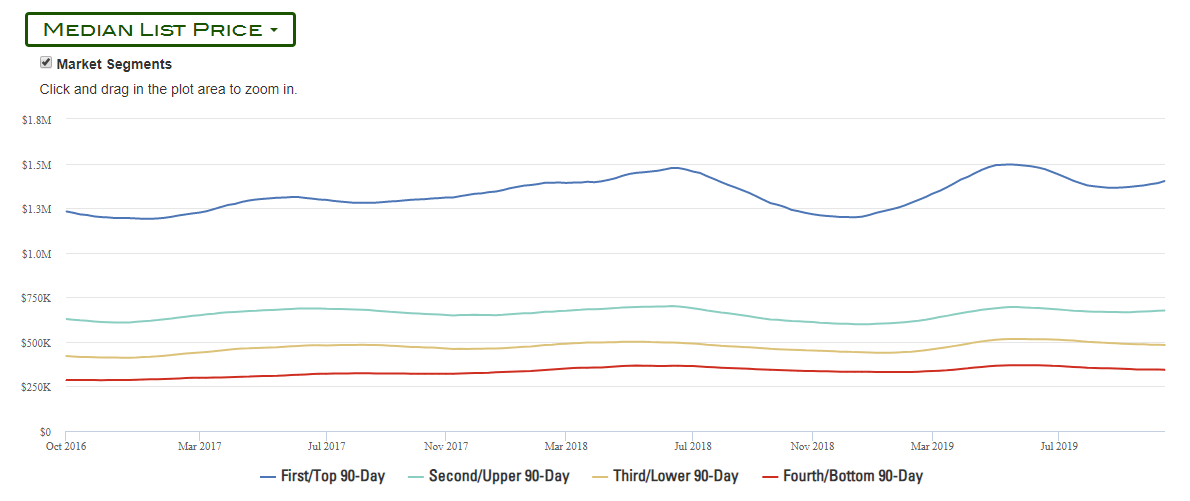
Market Seasonality

When the market is steadily rising, you can get away with slightly overpricing your home, because the market will eventually catch-up with your price.   Therefore, the Spring and Early Summer market tends to be far more forgiving when a home is slightly overpriced.       

However, when the market begins its seasonal decline in late Summer, FAR more care must be taken when pricing a home.   A home that is overpriced even slightly, will sit unsold as home values continue to drop even further below its set price.   Care must be taken to price slightly below the falling market, to guard against “missing the mark” and allowing the market to fall even further “out from under” the home.  This is why understanding the Colorado market cycles and pricing a home correctly based on the time of year, is crucial to getting a home sold and preserving your hard-earned equity.  

Declining market graph

*I will help you strategically price your home given the current market conditions of the area. We constantly study market data, to help ensure that we are fully in-tune with the market.  We will advise you on the best pricing strategy to get your home sold.


#13: Sellers failed to act on constructive feedback from buyers.

Listening to buyer feedback and taking quick action to remedy the items that are easy to fix, is crucial to ensuring that your home is appealing enough to land a buyer.  Understanding what buyers think about your home allows you to make necessary changes and capitalize on features buyers love most.   Many agents either fail to promptly pass along useful feedback to their sellers, or they do not heed the advice and urge the sellers to quickly act on it.   Buyer feedback with generally spell out the corrections needed to increase a home’s appeal.  Unfortunately, some agents simply don’t pass it along and/or some sellers disregard the helpful advice and fail to promptly act on it.

How I Can Help: I will stay in touch with all of the agents who tour your home and ask for both positive and negative feedback.  I will quickly relay all feedback and help you make any changes based on similar recurring feedback we receive from multiple buyers.   I will never sugar coat any issues, and I’ll have the sometimes-tough conversations that sellers need to hear.

#14: SOMETHING WENT WRONG IN THE NEGOTIATION PROCESS.

A big mistake many sellers make is outright rejecting lowball offers, because they view them as unreasonable or insulting.  The seller doesn’t bother to counter the offer, assuming that another buyer will soon come along and submit a higher offer (that may never come).   Buyers who make these lowball offers are just testing the waters to see how low a seller will go, but they may have been willing to pay a much higher price if a counteroffer had been made.  In fact, the offers received early in the listing are often the most interested, and solid offers the home will receive.  Early offers tend to come from buyers who have had their automated search filters set to notify them of a house with the exact features, price, or location that yours has.   The earliest offers tend to come from people who are looking for a home exactly like yours.

*We understand a delicate balance to the art of negotiation.   We have the experience to know how to negotiate without alienating a buyer, while simultaneously not leaving money on the table either.   We will always urge our sellers to counter any offer that comes in. 

Posted in Home-tips
Oct. 16, 2019

DMAR Luxury Housing Data 10/19

Denver Metro Association of Realtors, October 2019 Market Report


https://www.dmarealtors.com/sites/default/files/content/dmar_markettrendsreport_oct2019.pdf

https://u.realgeeks.media/davidsellsdenver/DMAR_Luxury_Data_Oct_2019.pdf

March 5, 2019

Top 10 Winter Destinations in Utah & Colorado

Are you planning a ski vacation, but don’t know where to go?  To make your planning a breeze, we have put together a list of the top 10 winter destinations for skiing in Utah and Colorado.  

Park City Mountain Resort

Park City Mountain Resort is a resort is located in the heart of Park City, Utah.

The resort is just a 35-minute drive from Salt Lake City International Airport.  It has been ranked by SKI magazine as North America’s #1 Most Accessible Resort and has made some significant upgrades since that time.

Park City Mountain Resort has been a major tourist attraction and is the largest resort in the United States.  It is most popularly known for the Sundance Film Festival that takes place in January. 

It has also been a training course for the U.S Ski Team and has hosted several events during the 2002 winter Olympics. 

The resort has 7,300 skiable acres, 348 runs, 41 lifts, and 7 terrain parks.  The longest run on the mountain iss is 3.5 miles.  The resort has award-winning restaurants that are in walking distance or easily accessible by the city’s free transportation system. It also has nine hotels and over two dozen restaurants. 

There are adventures to be had for every level of a skier at Park City Mountain Resort!

Snowbird Ski Resort

Snowbird Ski Resort is in the heart of the Wasatch National Forest.  It is a 45-minute drive from Salt Lake City, Utah

Snowbird Resort and Alta Ski Resort share Little Cottonwood Canyon.  The resorts offer joint day passes and season passes allowing access on both mountains.

In 2008, Outside named Alta-Snowbird the number one ski destination in North America.

Recently it has been ranked as the fourth best ski resort in North American by ZRankings.

The snowfall and weather at Snowbird are also considered to be the best.  The longest run is 2.5 miles and has over 168 runs, 13 lifts, and 2500 skiable acres.  There are 4 lodges in Snowbird’s pedestrian village, which grants easy access to the facilities.  The heated outdoor swimming pool, hot tub, and spas will make your stay feel like a luxurious one. 

There are 15 restaurants that offer both fine dining to casual dining experiences.  

Brighton Resort

Brighton Resort

Brighton Resort is located in Big Cottonwood Canyon.  It is 30 miles from Salt Lake City, Utah. 

Bright Resort was the first ski resort in Utah. It has been ranked as having the 2nd best snow. 

It is considered a “no frills” resort and their primary goal is to provide the best trails. 

It is known for its cliffs and natural features!  The resort has 1050 skiable acres, the longest run is 5.5 miles. The resort also offers 5 terrain parks and boasts 66 runs. 

If you are looking for the best trails and natural beauty, then Brighton Resort is the right choice. 

Deer Valley Resort

Deer Valley Resort

Deer Valley Resort is located in Park City, Utah.  The park is less than an hour drive from Salt Lake City.

The resort is ranked as one of the top ski resort in North America.  It was the host of some events in the 2002 Winter Olympics and often facilitates other skiing competitions. 

The resort also has an award-winning ski school. 

This resort does not only have amazing slopes and detailed trials, but it has some of the best amenities and gourmet dining. Staying at this luxury resort is described as being hassle-free. 

The Stein Eriksen Lodge is a luxury resort that is located on Deer Mountain, it is Forbes only 5-star hotel in Utah. The resort prides itself on its customer services and impeccable trails.  They offer the rare service of day and night ski storage.  They also have high-end ski in/out lodging.  The resort bans snowboarding and limits the number of people on the lifts and trails. 

The resort has 103 runs, 2026 skiable acres, 24 lifts, and the longest run is 4.5 miles. Deer Valley is the perfect destination that provides luxury, amazing customer services, and top-notch skiing.

Powder Mountain Ski Resort

Power Mountain Ski Resort

Powder Mountain Resort is located in Eden, Utah.  It is 55 miles from Salt Lake City International Airport. 

This resort is the largest ski resort in the United States by skiable acreage.  It ranks as #2 in the 25 ski resort in North America. 

The resort is consistently mentioned in the Ski Magazine’s “Best Value Resort” category.

It has 8464 skiable acres, 167 runs, 2 terrains, and the longest run is 3 miles. The resort offers cat skiing, which takes you away from the controlled ski areas to untouched powder by a snowcat.  The resort also offers powder country.  You will get to enjoy hundreds of acres of barely tracked skiing. 

The resort cap tickets to help preserve the powder.

Alta Ski Area

Alt Ski Area

Alta Ski Resort is located in Alta, Utah.  It is 26 miles from Salt Lake City.  The resort is one of the oldest ski resorts in the country. 

It has a very high altitude and receives more snow than most Utah resorts. 

Alta Ski Resort is one of the three resorts in the United States that prohibits snowboarding. 

It is known for its extremely challenging terrain and is inter-connected with Snowbird via the lifts and slopes.  The resort has 116 runs, 2614 skiable acres and the longest run is 1.3 miles. 

The lodging on the mountain consists of 5 ski lodges that are rustic and charming. The Alta Ski Area focuses on those who are serious about skiing.  

Solitude Mountain Resort

Solitude Mountain Resort

Solitude Mountain Resort is located in Big Cottonwood Canyon. It is 30 minutes from Salt Lake City, Utah.  It is best known for having some of the best powder in the country due to its location. 

Solitude is one of the smaller ski resorts. It has 80 runs, 1200 acres and the longest run is 3.5 miles. 

It is family oriented with a large variety of beginner and intermediate slopes.

If you are looking for a quieter, relaxing atmosphere with fewer crowds, Solitude Mountain Resort is a perfect fit. 

Breckenridge Ski Resort

Breckenridge Ski Resoirt

Breckenridge Ski Resort is located in Breckenridge, Colorado.  Breckenridge is an authentic mountain town and the largest historic district in Colorado. 

There are a variety of options for dining, lodging, and entertainment in this mining town!  It is one of the most visited ski resorts in Colorado. Breckenridge is a great place to practice freestyle tricks and jumps with their world-renowned half pipes and terrain parks. 

Professional skiers and snowboarders train at Breckenridge. The resort has 155 runs, 2908 of skiable acres the longest run is 3.5 miles.  It also offers double diamond powder skiing to advance skiers. 

There are lots of opportunities for every level of skier.  

Telluride Ski Resort

Telluride Ski Resoirt

Telluride is located in Mountain Village, Colorado.  While Telluride Ski Resort does not have much shopping or luxury hotels, the quality of skiing, food, and lack of crowds is where it excels. 

In 2016-2017, the Ski Magazine reader’s poll ranked the resort North America’s Best for Overall Satisfaction. 

It also ranked number one for Scenery and Character.  Telluride Ski Resort has over 50% beginner and intermediate runs, yet also offers extreme terrain for the advanced/experts. 

It also has 2000 skiable acres, the longest run is 4.6 miles; there are 3 terrain parks and 127 runs. Telluride is the perfect destination for great skiing (with a view) and amazing food!

Vail Ski Resort

Vail Ski Resoirt

Vail Ski Resort is located in Vale, Colorado.  It is the third largest single mountain ski resort in the United States. The resort has been dubbed “King of American ski resorts”.

Vail Ski Resort is the most popular ski resort in the United States.  It is world famous for its “Back Bowls”, and offers more than 3000 acres of open-bowl skiing.  Vail has 5289 skiable acres, 193 runs (53% are advanced/expert), 31 lift systems and the longest run is 4 miles. 

Vale has luxury hotels, a large quantity of restaurants and many spas.  This resort offers it all!  


Feb. 14, 2019

How to choose the best home builder in Denver

How to choose the best home builder in Denver

Building a new house can be both exhilarating and confusing. While the idea of choosing flooring and paint colors are exciting, getting to that point requires many major decisions, the first, and arguably most important being your builder. There are a number of questions you will need to be answered before you are ready to make your choice. 

What can I afford?

It is important to get an accurate amount of what is affordable to you and your lifestyle. While most pre-built houses come with little variables, a new build budget can easily take on a life of its own if not planned for carefully. Certain items, such as lot price will be set, however, the house itself will have options that can quickly add up. Standard flooring or hardwood? Laminate countertops or granite? Choices like these can majorly impact your budget if not pre-planned for, turning your dream build into a financial nightmare.

Where do I want to build?

Most people are fairly certain of the city they would like to live in; however, you will need to narrow down a specific neighborhood as well. Many builders purchase entire subdivisions, divide it up into lots and sell off those lots to buyers looking to build. If you have your heart set on a certain area, or lot, you will need to speak with the builder who owns that area. If you’ve picked a lot that is privately owned you will have a bit more freedom when selecting a builder. Conversely, if you found your dream location but want a certain builder, there is potential to purchase the lot separately and have your chosen company do the work for you. 

What do I want to build?

What type of home you want to build is an important question to ask early on in the decision-making process. Depending on your answer you could be narrowing your options quite quickly. If you are in the market for a truly custom home you will need to work with a builder who offers that service, otherwise there are typically a number of floor plans already designed that you would choose from. To get a clear picture of what those plans look like your best bet would be to go through model homes, as they will show you exactly what the basis of your home will be. Most builders offer a variety of options once you’ve settled on a specific layout. 

How to choose the builder?

Once you’ve narrowed down, how much, where and what, you will need to decide the who. As stated before, depending on the chosen location and lot your options might be limited. If you are able to select a builder or are flexible on the neighborhood you will want to thoroughly research all your choices. Check out websites, read reviews, ask friends and family. Reputation and word of mouth is the best way to get a clear picture of what it is like to work with certain builders. After narrowing down your options, make the call. Set up an appointment and meet the team. They will be happy to sit down with you and go over the process. Also, it gives you an opportunity to ask questions and voice any concerns you may have. 

Making the final decision.

After you settle on a company you will enter into a contract to commence the build. An agreement is signed and your builder is ready to start the process. Along the way you will want to stay involved, choosing flooring and paint color, as well as making sure the build is happening according to your agreement, 

All in all, building a new house should be a fun experience. Working with a builder who is committed to partnering with you to see your vision come to life will ensure it remains that way. 

Dec. 26, 2018

Foreclosure Terms and Timeline in Colorado

Forclosure Graphic Timeline

https://frascona.com/colorado-foreclosure-process-and-time-frames/

http://www.foreclosurelaw.org/Colorado_Foreclosure_Law.htm

https://www.alllaw.com/articles/nolo/foreclosure/laws-in-colorado.html


Posted in Blog Links
Dec. 10, 2018

Moving to Denver, Colorado? 15 Reasons Why You Should

Moving to Denver, Colorado Main Banner

If you or someone you know is planning on moving to Denver, Colorado, you need to read this. We’ve got the lowdown on what to expect - and all the reasons why you should move to Denver. 

Is The Centennial State right for you? Will you be happy living here? You’ll want to make sure. Not only is the area in and around Denver, Colorado filled with vibrant scenery - including snowy mountains - but the city also sees all four seasons.

If you like the sound of constant change and seasonal activities, Denver, Colorado is the place for you. The chill and white fluffy stuff is a yearly event. It also guides a lot of activities during the winter months. On top of that, the summer months are filled with sunshine and even more activities. 

Still unsure what to expect? Don’t worry. We’ve got 15 more reasons why you should move to Denver.

1. Mountains! Mountains! Mountains! 

Moving to Denver Colorado Mountains Banner

You can’t beat the high peaks and incredible views. 

Fun fact: Denver, the capital of Colorado, is 1 mile above sea level. It’s not called the mile high city for no reason. Yet, newcomers may find the air a bit thinner - prepare for this and take ‘er easy for the first week or so your in town. 

Yet, these heights offer spectacular and challenging hiking trails. You also get one heck of a ski season! There’s Aspen, Breckenridge, Vail, and Steamboat Springs - all within the state of Colorado and relatively close by to Denver.

If part of the year you claim the title of ‘ski bum,’ Denver will not disappoint. Weekend ski excursions will become your new normal. You’ll constantly be discovering new and exciting slopes.

It’s an adventurous and outdoorsy person’s dream. 

And the pictures you send home to the family will have them green with envy. They’ll practically be begging to come out for a visit. No matter where you are, the background will likely be filled with glorious and monstrous mountains. In other words, there’s no angle or spot unworthy of a kodak moment.

Sunrises and sunsets are nothing short of spectacular in this city. The colors painted across the sky will have you waking up and hitting the bed filled with gratitude and happiness. You’ll find yourself thinking how cool it is that you get to live in a place like this. 

2. Denver, Colorado is Very Safe

Moving to Denver Colorado Safe banner

You probably already know that marijuana is legal in the state of Colorado. It’s not exactly new news. But crime rates have reportedly fallen since legalization. 

Yet, in 2018 the crime rate was above the national average. But let’s put it this way: violent crime is way below the national average. In Colorado, violent crimes average at 0.73 per every 1000 people. 

Some of the safest neighborhoods in Denver include Smith Rd/Havana St, W Kenyon Ave/S Sheridan Blvd, 48th Ave/Picadilly Rd, and Holly Hills. Choosing a spot to live in these areas puts you in a fairly secure and safe location. You can rest easy knowing the chances of crime are fairly low. 

3. Renting in Denver, Colorado is Affordable

Moving to Denver Colorado Home Banner

… But buying a home may come at a high cost. There is a bit of a housing crisis starting. But you can find great places to live in Colorado at a reasonable price. The top 10 cities and towns in Colorado, ranked by affordability - especially considering housing costs - include: 

Lamar

La Junta

Pueblo

Trinidad

Alamosa

Fountain

Colorado Springs

Woodland Park

Manitou Springs

In contrast, Vail is the most expensive place to live in Colorado. The median price for homes in Colorado is listed is $415,000. But renting in Denver proves to be affordable for the average person. Rent averages at about $1200 for a 1 bedroom apartment in Denver and about $2,100 for a 2 bedroom apartment in Denver. In other words, rent is slightly more expensive than the average city in the South and Midwest. Yet, it is more affordable than other big markets, such as L.A., Miami, or NYC. 

If you’re still curious about living costs and affordability, David Sells Denver can help you out! 

4. Traffic Isn’t Too Shabby.

Moving to Denver Colorado Traffic Banner

It beats places like Seattle or the downright awful L.A. Yet, in the major city hubs, it can be a bit of a headache and is worse than the typical Midwest city. There are plenty of people that have recognized the benefits of living in Denver, Colorado - which means more cars on the road. Luckily, most public transportation systems are efficient and reasonably priced - and they are especially useful when the weather gets bad. Systems such as trains and light rails offer easy transportation even in the case of a bad storm. 

On top of that, Uber, Lyft, and other taxis are readily available in major cities, like Denver. The cities are further well equipped for cyclists.

When the weather permits, getting around isn’t too bad. You can even get your workout in throughout the process. With many trails and cyclist lanes, it’s one of the better places for cycling to work. And Denver has a variety of bike sharing systems, making your commute that much easier.

5. You Will Never Run Out of Recreational Activities!

Moving to Denver Colorado Recreation banner

The mountains offer year-round opportunity to get outdoors and have fun. And you’ll likely be liking close to a national or state park with plenty of opportunities to get active and get outdoors.

We weren’t kidding when we said earlier that Denver is the perfect place for the adventurous and outdoors-type person. From summer cycling and running and hiking to winter skiing, snowshoeing, snowmobiling and more, you won’t run out of things to do - or new things to try. Plus, these activities will keep you in tip-top shape and health.

And according to research, getting outside more makes us happier and more satisfied individuals. In Colorado, it’s the thing to do - go outside and explore. It’s what everyone does. The society and people fully support it. So... if you aren’t really an outdoors person, get ready to become one!

For concert buffs, this is the ultimate setting. The red rocks provide the optimal setting for an amphitheater. The Beatles have even performed in this venue. And it completely supports Colorado’s outdoors inclinations.

The setting promotes some of the best natural acoustics and sounds. It is further a regular venue for movie screenings. It’s located about 10 miles outside of Denver and definitely worth a visit (especially once you make Colorado your home state!).

6. The Red Rocks Amphitheatre

Moving to Denver Colorado Red Rocks Amphitheater Banner

For concert buffs, this is the ultimate setting. The red rocks provide the optimal setting for an amphitheater. The Beatles have even performed in this venue. And it completely supports Colorado’s outdoor inclinations.

The setting promotes some of the best natural acoustics and sounds. It is further a regular venue for movie screenings. It’s located about 10 miles outside of Denver and definitely worth a visit.

7. The Craft Beer Industry is Booming!

Moving to Denver Colorado Craft Beer Banner

Don’t the great outdoors and beer kind of go hand in hand? Think camping or taking in an incredible sunset.

If you’re into craft beer, Denver has a never-ending list of craft beers. You will never run out of beers to try. Your nights out and weekends can quickly become filled with brewery tours and outings. 

8. Colorado’s Economy is Up and Up.

Moving to Denver Colorado Economy Banner

If you’re worried about finding a job here, you don’t have to be. There are incredible job opportunities in Denver, Colorado. The state has one of the highest GDP growths in the country. In other words, Colorado’s economy is doing really well. Forbes even listed Denver, the capital, as the 4th in Best Places for Business and Careers.

9. All the Sports Teams!

Moving to Denver Colorado Sports Banner

You won’t have to look far for a local sports team to cheer on. As much as people living in Colorado love getting outside and staying active, they also love their sports. Denver, alone, has the Denver Broncos, the Denver Nuggets, the Colorado Rockies, Colorado Avalanche, and Colorado Rapids. And their teams actually do well!

The Broncos won the Superbowl in 2015. The Colorado Avalanche hockey team reaches the playoffs most years. Colorado has teams you’ll be proud of and actually want to cheer on! It also scores major points in the entertainment category - it’s another thing to do in beautiful Colorado.

10. All 4 Seasons Offer Constant Change.

Moving to Denver Colorado Weather Banner

We mentioned this earlier. But Denver gets all 4 seasons - winter, spring, summer, and fall. Change is constant. You won’t have one season longer than for a handful of months. It keeps life interesting and contributes to a happier and more fulfilling life. 

With seasonal changes come a change of activities and scenery variations. The other good news? You still get plenty of sunshine. There is maybe a month or so where the days seem much shorter, but other than that you can expect plenty of sun and daylight hours. The average annual temperature is 50 Degrees Fahrenheit - meaning the winters aren’t too harsh or cold either.

If you are going to experience an “ideal” winter, Colorado is it.

11. Move to Denver, Colorado for Your Health

Moving to Denver Colorado Health Banner

Not many states support an active and healthy lifestyle like Colorado does. In fact, it has the lowest obesity out of all 50 states. You are more likely to be fit and healthy when you live in Colorado. And we aren’t going to lie - the outdoors definitely plays a part.

You can walk, bike, run, and more in some of the most breathtaking spots in the world.

12. 145 Languages are Spoken in Denver, Colorado

Moving to Denver Colorado Diverse Banner

Colorado is diverse, with the capital city being home to over 145 different languages. Languages spoken include Vietnamese, Spanish, Arabic, and Norwegian - with English being the official language and common tongue. So hey, if you want to learn a language, Colorado is probably one of the best places in the US to do so. 

13. Denver has a Food Industry that Can’t be Beat!

Moving to Denver Colorado Food banner

The city of Denver has an exciting and tasty restaurant selection. Not to mention, many popular fast-food chains started in the great state of Colorado, including Smashburger, Quiznos, Noodles & Company, and Boston Market. On top of that, you get a mix of Mexican and Vietnamese places to choose from - plus, Denver, Colorado is home to some of the best steakhouses around! You’ll want to check out restaurants close by.

14. Performing Arts are All the Rage.

Moving to Denver Colorado Performing Arts Banner

The Denver Center for the Performing Arts has highly praised Broadway shows, plays, and more. The theatre organization consists of various entertainment venues - meaning you likely won’t have to go far to find a suitable play or show to watch!

15. Denver: A Melting Pot of People & Cultures

Moving to Denver Colorado People Banner

As we said, there are over 145 languages spoken in Denver. In addition, the city is ever-changing and ever-growing, with new cultures coming and going - but often leaving their impact, whether it be in food, culture, or buildings. This gives way to the friendly and open atmosphere that the Colorado people boast about! They are accepting and open to trying new things and meeting new people.

It’s a great place to learn and evolve as an individual and a person. 

BONUS: It is a Start-Up Heaven

San Francisco tends to get all the attention for this one. But Colorado has opportunities galore - and not just in terms of jobs. There’s educational and networking events. Financial opportunities for entrepreneurs actually exist here! It’s one of the best places to start a new business or venture.

Most of the cities also have modern co-working spaces. Within these spaces, you can connect with others doing similar jobs or going after similar opportunities. It’s perfect for new and old entrepreneurs and business owners.

So, what are you waiting for? Colorado is one of the best places to live in the United States, including plenty of opportunities for work, play, and fun! The beautiful scenery, the open and friendly people, and an abundant amount of amenities and entertainment make Colorado hard to beat. You won’t ever be bored.

If you’re considering moving to Colorado, contact David Sells Denver today! Our team can answer any of your questions or concerns about Colorado and the Denver area.

Posted in Home Buying
Dec. 1, 2018

Pros and Cons of an ARM Mortgage

Pros and Cons of an ARM Mortgage

Is an Arm Right for Me?

The majority of homeowners engage in a conventional mortgage. You know the type where you pay the same monthly payment over the life of the loan. There are no surprises. Each month you will pay the exact same amount. However, there are other mortgage options available to potential home buyers. One of these is called the adjustable rate mortgage or ARM. It certainly has its place in the market. But it's not without its own advantages and disadvantages. We will cover what an ARM is, and who should be enticed to enter into this type of mortgage. Plus we will talk about the pros and cons of this particular 

What is an Adjustable Rate Mortgage?

Unlike its conventional brother, the payment amount you make each month can and will change over time. The interest rate is based upon the current market conditions. The rate will adjust (usually upwards) and you will most likely be sending more money to your financial institution each month. We say probably because rates have been rising as of late. If rates were to fall again, then you actually might be making smaller monthly payments. However, given that rates have been so low for so long, chances are that the opposite will be occurring. WIth an ARM the interest rate is usually set for 5 years. But it can also be locked in for 7 and sometimes 9 years. 

There are also caps. There is a limit on how many times a rate can reset per year and over the life of the entire loan. How much and when will all be spelled out in the paperwork before you sign. It doesn't take much movement in the rates to make a big impact on your payment.

Who is an ARM Targeted to?

It's definitely riskier. But there are specific groups of people who might be interested in this type of mortgage

It's for homeowners who will only be living in their home for a short period of time. Maybe your job will be relocating you to a different part of the country. Or it's possible you know that your personal life decisions will take you elsewhere. If this is that case, then you won't be worried about rates increasing. 

You are purchasing a home in an area that has shown explosive growth. It will only take you a few years to gain appreciation in the home. Then you will sell the home before the rate can reset higher. 

Advantages and Disadvantages to Consider

We will cover the disadvantages first.

Your rate will reset after the intro period. If rates go up and you cannot afford the monthly payment, then you will be in an unenviable position. It might be tough for you to make ends meet.  

If you do sell, you may be exposed to a prepayment penalty. The lenders realize that this a possibility and are hedging themselves in the event that you do sell.

You might not be able to afford the payments or sell the home. The banks may foreclose on your home, bringing more hardship. 

Here are the advantages to consider

The introductory rate is usually lower than one on a conventional mortgage. You get to live in a home and pay a lower rate than many others. 

The ARM is perfect for those that will only be living in their home for 5 years or less in most cases. And if the home appreciates in value, you will make a nice profit.

It's also great for prospectors who know the area.  If the  city or town you live in is gaining jobs then more people will be moving into the area. More demand creates a higher price.

Also if the rate does reset after the initial frozen term, you might be able to refiance.

If you are looking for for a mortgage to buy a home, or you want to rent Midtown Houston apartments, then check out Rentkidz.com today. They assist consumers find rentals and homes

Posted in Home-tips